
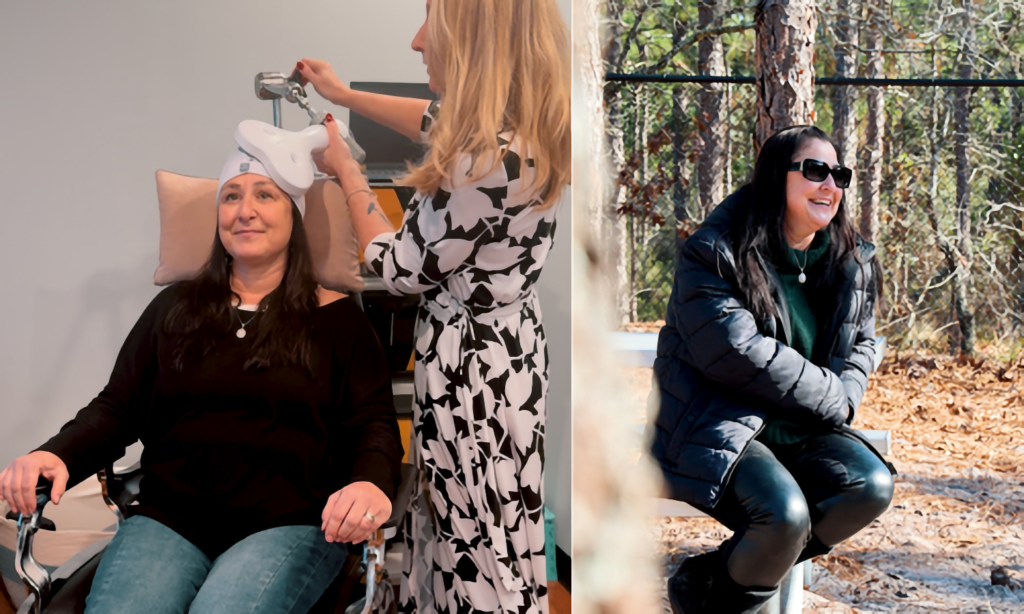
For nearly 16 years, one mother in Wilmington, North Carolina quietly struggled with anxiety and depression. Like so many individuals’ facing treatment-resistant depression, she cycled through medication after medication that came with serious side facing treatment-resistant depression, she cycled through medication after medication that came with serious side-effects, only to find that the medication either did not work or only provided temporary relief.
“I would go on meds and feel great for months at a time, but it never lasted,” she shared. “The meds worked until they did not.”
At the beginning of 2025, her depression reached an all-time low. In an effort to feel better, more prescriptions were added- then even more medications to counteract the side effects. What began as a search for relief turned into exhaustion and discouragement.
“I was about to finally give up when I discovered TMS Therapy.”
When Medications Aren’t Enough
For many individuals with treatment-resistant depression, this story is all too familiar. According to national data, nearly one-third of people with major depressive disorder do not respond adequately to traditional anti-depressants. While medication can be life-changing for some, others find themselves finding little-to-no relief and stuck dealing with the side effects.
That is where Transcranial Magnetic Stimulation (TMS) comes in.
TMS therapy is an FDA-approved, noninvasive treatment designed specifically for individuals who have not found relief through medication alone. Rather than introducing another prescription into the body, TMS uses gentle magnetic pulses to stimulate underactive areas of the brain associated with mood regulation.
What TMS Treatment Really Looks Like
One of the biggest misconceptions about advanced treatments for depression or anxiety is that they are invasive or time-consuming. In reality, TMS sessions are remarkably simple.
Most TMS sessions last between 10–20 minutes. Patients remain awake and alert, seated comfortably while a magnetic coil is positioned near the scalp to target specific areas of the brain. There is no anesthesia, no recovery time, and patients can drive themselves home immediately afterward. Compared to traditional medications, TMS has little-to-no side effects.
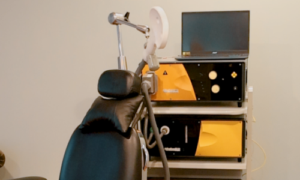
From the start, this Wilmington mother felt supported.
“The staff made me feel right at home and took a little of the nervousness away. They sat and chatted with me during every treatment. And made sure they had Jolly Ranchers stocked for me!”
Noticing the Change
While every patient’s journey is unique, many begin noticing improvements within the first few weeks of treatment.
“By the 10th or so treatment I thought I felt a difference. By the 15th treatment I knew I had made the right decision!”
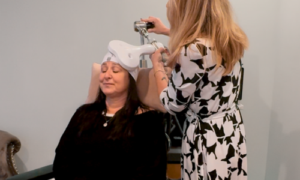
Clinical studies show that a significant percentage of patients with treatment-resistant depression experience meaningful symptom reduction with TMS therapy, and many achieve full remission. Unlike medications, TMS works by directly stimulating neural pathways involved in mood regulation—helping the brain function more effectively over time.
“The Best Decision I Have Ever Made”
For this Wilmington mother, TMS therapy was life changing.
“Getting TMS treatment is TRULY the best decision I have ever made!! THANK YOU, Dr. Albert and the amazing staff, for giving me my life back!”
Her story is a powerful reminder that when traditional treatments fall short, hope is not lost. With FDA-approved options like TMS therapy, individuals struggling with long-term depression have access to innovative, science-backed solutions that don’t require adding another medication.
If you or a loved one has been living with treatment-resistant depression, know that there are alternatives—and that healing is possible. Contact the Center for Brain Stimulation today and let our team help decide if TMS Therapy is right for you. 910-294-0410.